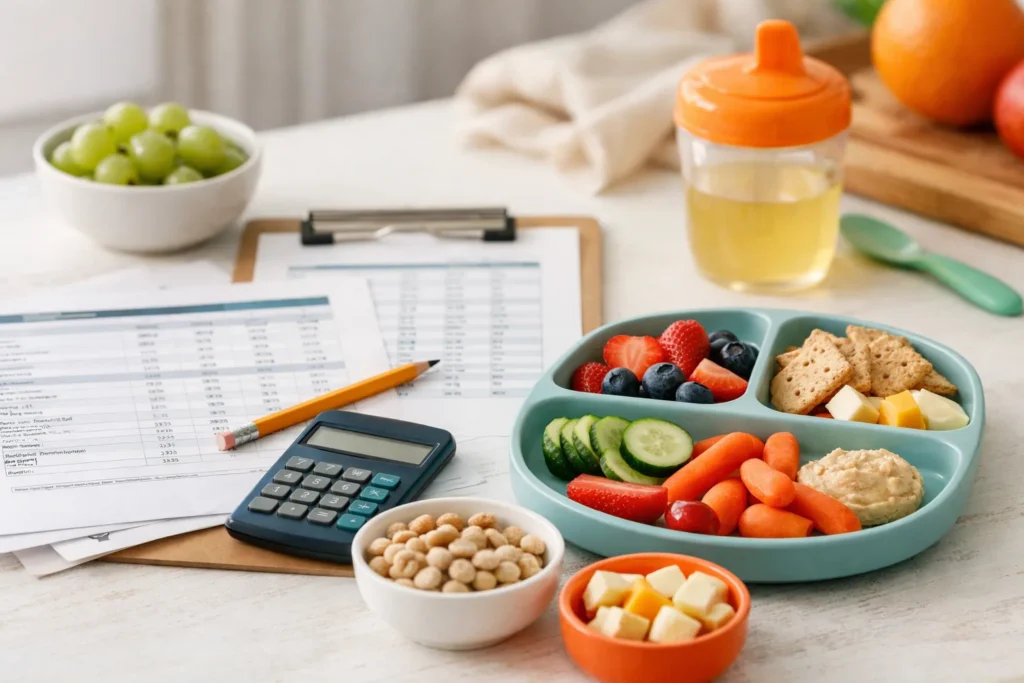



A toddler dinner can end up in one of two places: the plate gets pushed away, or the parent gets frustrated. A simple plate plan helps with both. USDA’s MyPlate, the federal government’s visual guide to balanced eating, divides a plate into fruits, vegetables, grains, and protein, with a side of dairy. It works for toddlers too, if the portions are small and the expectations are modest. This is general information, not personalized nutrition advice. If you are worried about your child’s growth or eating, your pediatrician is the right person to ask.
Start with one food your toddler already eats
The most useful rule for picky eaters is to put at least one familiar food on the plate at every meal. That might be pasta, rice, a banana, or plain bread. The familiar food means your child never faces a plate of only unknown foods, and that takes much of the pressure off. The other foods on the plate are there to be seen, smelled, and perhaps tried, not required.
Build the plate in four parts
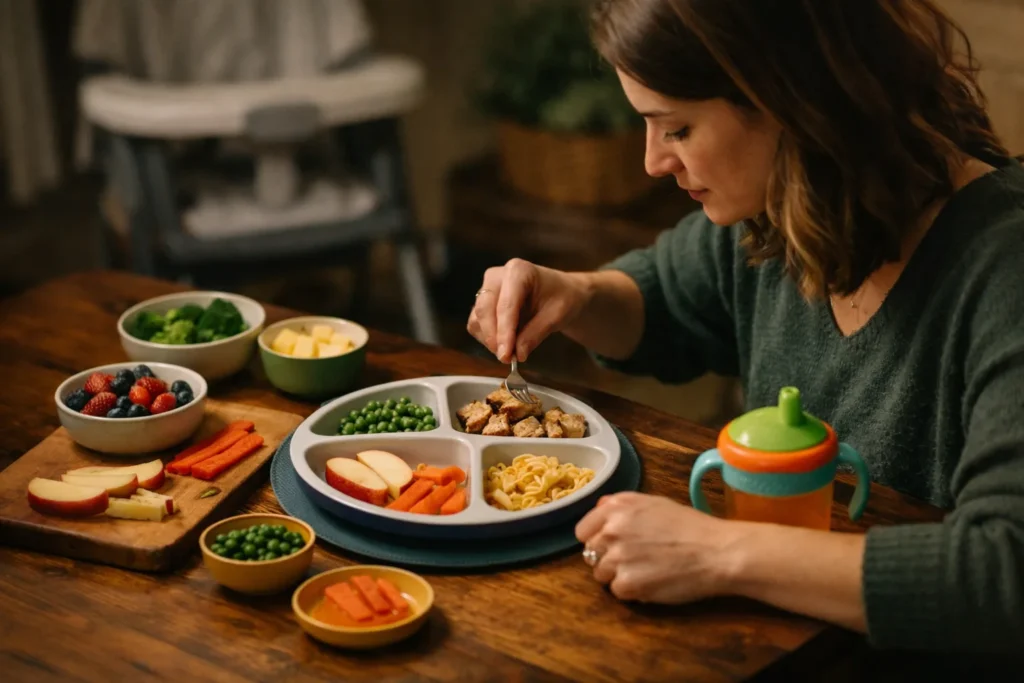
- A grain. Pasta, rice, bread, or tortilla. This is often the familiar food. Serve about two tablespoons to a quarter cup to start.
- A protein. Soft shredded chicken, beans, eggs, or tofu cut in small pieces. A tablespoon or two is plenty at first.
- A vegetable. One or two soft pieces, such as steamed carrots or peas. It can be the same vegetable several nights in a row.
- A fruit. Sliced soft fruit like banana or pear works well and can double as dessert or a side.
Add a small serving of milk or plain yogurt, if that suits your child. The MyPlate site, myplate.gov, includes a section for kids and a MyPlate Kitchen with recipes and meal ideas, so you can see how the groups fit together.
Keep the portions small
Toddler stomachs are small, and a plate that looks full can be overwhelming. A common rule of thumb is about one tablespoon of each food per year of age, but it is only a guideline. Start small and let your child ask for more. A smaller plate makes the empty spaces feel less like failure.
Serve, then step back
- Put the food on the table and sit down with your child.
- Eat your own meal, and let your toddler see you enjoying the foods on the plate.
- Do not comment on how much is eaten. Avoid bribes, bargaining, and “just one bite.”
- When your child is done, take the plate away without fuss.
The idea is that you decide what is served and when, and your child decides whether to eat and how much. Pressure tends to make picky eating worse, not better. Some nights your toddler will eat three bites of pasta and nothing else, and that is within the range of normal.
A sample dinner
Plain pasta (the familiar food), a spoonful of shredded chicken, three steamed carrot coins, and a few slices of pear. Milk in a cup. Nothing exotic, nothing hidden, and nothing that requires a performance.
When to ask for help
Picky eating is common between ages one and four. Talk to your pediatrician if your child eats a very narrow list of foods, loses weight, gags regularly, or shows signs of a possible allergy. Take any choking concern seriously and cut foods to a safe size for toddlers; our guide to sleep and naps covers the routines that can make mealtime easier, since a tired child is a pickier eater.