

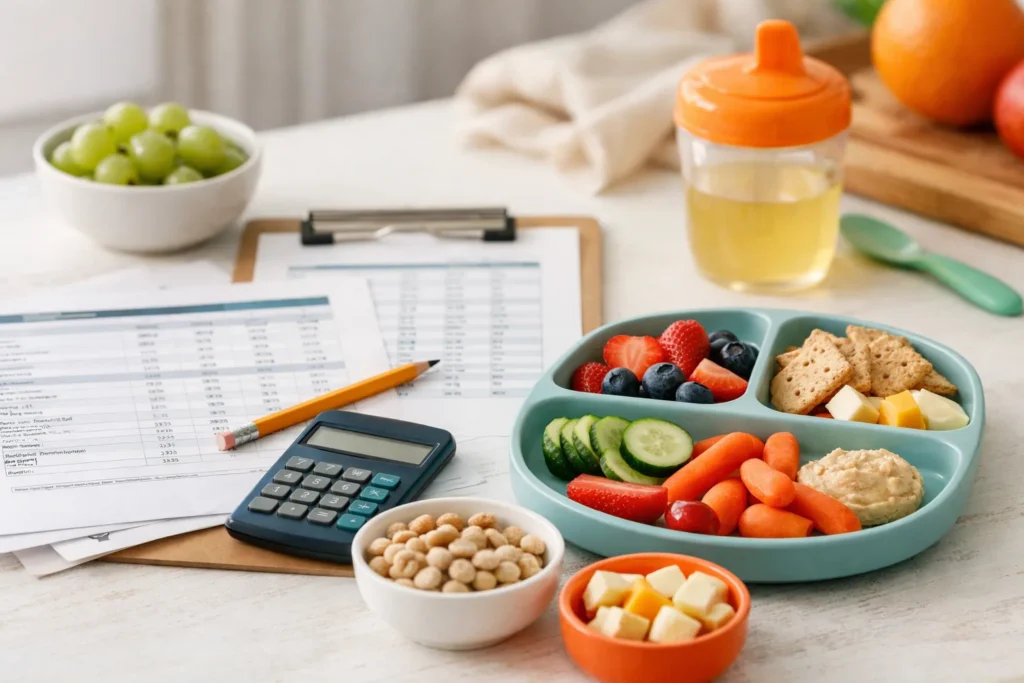
Toddlers eat small amounts, often. Between the three meals of the day, most children this age do well with one or two planned snacks. The trick is making them useful: something with fiber, protein, or healthy fat, in a portion that will not spoil dinner. The U.S. Department of Agriculture runs a free database, FoodData Central, where you can look up the calories and nutrients of almost any food. The numbers below are approximate, rounded from typical entries in that database, and they will vary by brand and by the size of the piece.
Six common snacks
| Snack | Toddler portion | Approx. calories | Prep note |
|---|---|---|---|
| Banana | Half of a medium banana | About 50 | Slice into rounds, then halve the rounds |
| Plain yogurt | About 1/4 cup (60 g) | About 35 to 60, depending on fat content | Choose plain; stir in a little mashed fruit |
| Cheese | One small cube or a thin slice | About 50 to 60 | Cut into small pieces, not sticks |
| Whole wheat toast | Half a slice | About 40 to 60 | Cut into thin strips; a thin spread of nut butter is an option for children without allergies |
| Steamed carrots | 2 to 3 tablespoons | About 10 to 15 | Cook until soft; raw carrots are a choking risk |
| Cooked oatmeal | 1/4 cup | About 35 to 40 | Mix with a little fruit for flavor |
How to check the numbers yourself
FoodData Central lets you search by food name and shows a list of results. Look for entries labeled “Foundation” or “SR Legacy,” which are generally based on lab analysis of common foods, rather than only the packaged products. Then read the portion size shown, usually 100 grams, and scale it to your child’s serving. For a banana, for example, the entry for 100 grams is around 90 calories, so a half banana of about 60 grams is roughly 55. It takes a minute and shows you how much food is in a typical toddler portion.
What a toddler snack should do
- Fit the schedule. A snack between meals, about two hours from the next one, leaves room for appetite at dinner.
- Include fiber or protein. Fruit with yogurt, or vegetable with a dip, lasts longer than crackers alone.
- Be easy to eat safely. Soft, small, and eaten seated. Round hard foods, such as whole grapes or nuts, need to be cut or avoided at this age.
- Be one choice. Offer a single snack and a drink. Grazing all day makes meals harder.
Putting a snack plan together
A planned snack beats a random one. Choose a time, such as mid-morning and mid-afternoon, and offer the snack at the table or on a mat, not in the stroller or in front of a screen. Pair two items when you can, such as banana with yogurt or toast strips with cheese, so your toddler gets a bit of carbohydrate and a bit of protein. Water is the default drink between meals; milk or juice right before a meal can fill a small stomach.
It also helps to rotate. A toddler who sees the same snack every day may refuse it by the end of the week, while a rotating list of six keeps things interesting. Keep a note on the fridge, and let your child choose between two of the items on busy days. Offer snacks that a child can pick up with fingers and eat in small bites, and keep the pieces small and soft.
A reminder about calories
You do not need to count calories for a healthy toddler. The numbers here are a way to understand portions, not a target. Children’s appetites swing from day to day, and a snack that looks tiny to an adult may be enough. If you have concerns about weight, growth, or food allergies, talk to your pediatrician. The USDA’s MyPlate site offers more general guidance on feeding young children.