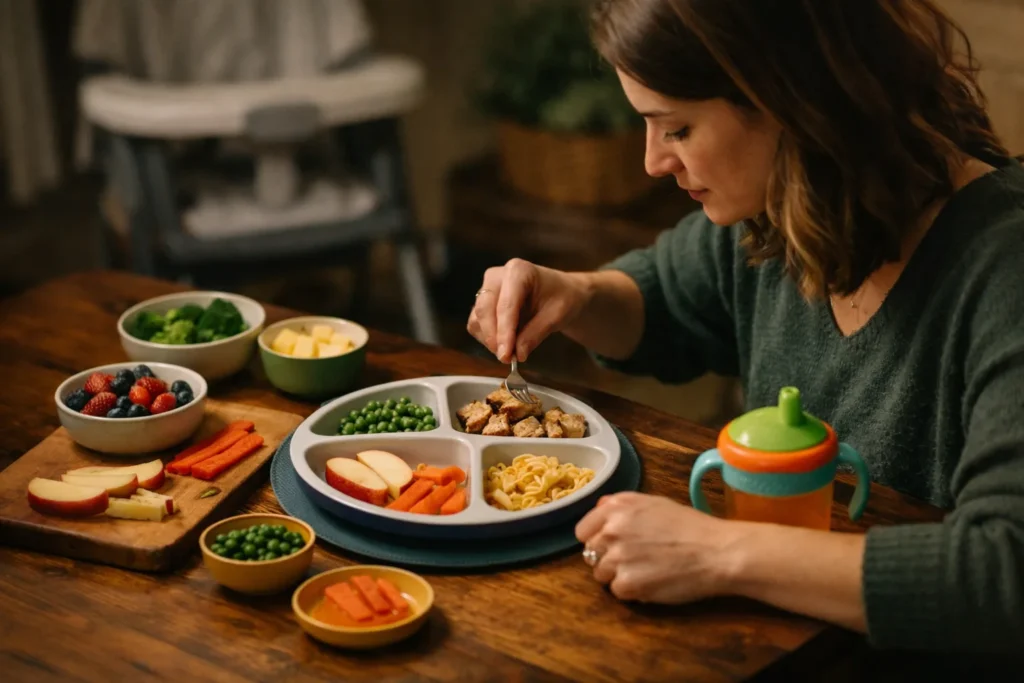





A toddler who refuses broccoli on Monday may poke at it on Thursday and eat two pieces the following week. That slow curve is the main thing to know about new foods. USDA Team Nutrition, part of the Food and Nutrition Service, publishes feeding resources for families and child care programs, and a recurring theme is that exposure takes time and pressure gets in the way. This is general information, not nutrition advice for a specific child.
Repeat the offer, without expecting a bite
Children often need to see, touch, and smell a food many times before they taste it. A refusal is not a verdict. Put a small portion of the new food on the plate next to something familiar, and leave it there without comment. If it is ignored, try again in a few days, perhaps cooked a different way: roasted instead of steamed, cut into sticks instead of rounds.
Children’s food preferences develop gradually, so offer new foods many times in a relaxed setting and let children decide whether and how much to eat. — Paraphrased from U.S. Department of Agriculture feeding guidance
Eat together when you can
Toddlers copy what they see. A parent who calmly eats a salad at the table does more than one who coaxes from across the room. Try to have at least one meal a day where everyone sits down together, even if it is brief and the menu is simple. Turn off the television and put phones away so there is nothing competing with the food.
Let your toddler decide how much
This is the hardest part for many adults. The usual advice, which pediatric groups share, is that the adult chooses what and when, and the child chooses whether and how much. In practice:
- Serve a small portion and allow seconds.
- Skip phrases like “two more bites” and “good job eating.”
- Do not use dessert as a reward for finishing vegetables.
- End the meal when your child is done, without a lecture.
What tends not to work
Parents in many households report the same missteps. Hiding vegetables in sauces can feel clever, but the child may refuse the sauce later. Making a separate meal on demand teaches that refusal gets a menu change. Praise and bribes can make the food seem like a chore. Pressure can also turn a mild preference into a power struggle. If a plan feels like a battle, it is probably the wrong plan.
Small ways to make new foods familiar
- Involve your child. Let your toddler wash vegetables, stir, or sprinkle cheese.
- Use dips. A little plain yogurt or hummus can make an unfamiliar vegetable feel less strange.
- Change the shape. Cut the same food in strips, rounds, or small cubes.
- Keep the pace slow. One new food at a time is plenty.
When to talk to the pediatrician
Most picky eating passes. If your child gags often, refuses entire food groups, is not gaining weight as expected, or has strong reactions to textures, ask your pediatrician for guidance. The USDA’s Food and Nutrition Service website has resources on child nutrition, and the AAP’s HealthyChildren.org covers common feeding questions. And remember that a calm table is a goal in itself.