



Somewhere around age two or three, many toddlers start to say they do not like the dark. A night light is the obvious fix, and it often works. The National Sleep Foundation, a nonprofit that publishes sleep education for families, notes in its general advice that the bedroom should be dark, cool, and quiet for good sleep, and that light exposure at night can affect how easily a person falls asleep. That does not rule out a night light. It means the kind of light matters.
Dark or dim?
If your child falls asleep easily in a dark room, there is no need to add a light. Darkness is the default recommendation for sleep. A light is worth trying when a toddler is clearly afraid of the dark, when getting to the bathroom at night is a worry, or when your child wakes and needs to find the door.
What kind of light to choose
- Warm color. Amber, orange, or soft red tones are generally gentler than bright white or blue light, which is more alerting.
- Low brightness. The light should be just enough to see the outline of the room, not bright enough to read by.
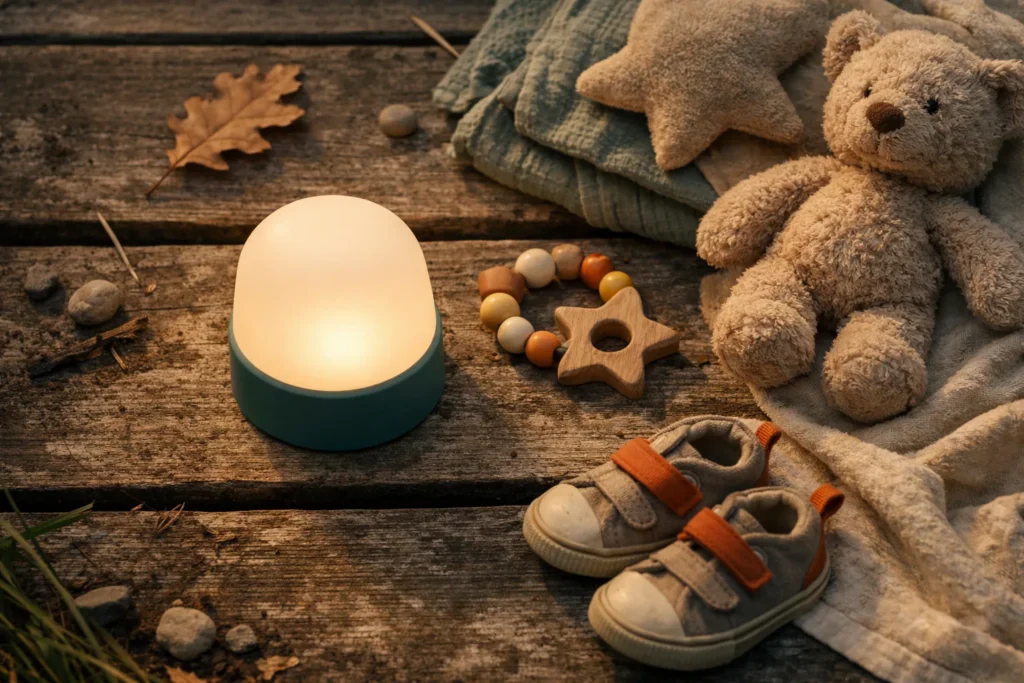
- Cool to the touch. Choose a model that does not get hot, and has no loose small parts or exposed bulbs.
- Constant, not flashing. Avoid lights that change color or play music, which invite play rather than sleep.
Where to put it
Place the light low and away from the bed, such as in an outlet across the room or by the door. A light at eye level near the pillow is more likely to keep a toddler awake. Keep cords out of reach, and keep the light away from curtains or bedding. If you also use a baby monitor or a white noise machine, check that their lights are not too bright; a small tape patch over a glaring indicator is an easy fix.
Other ways to help a child who fears the dark
- Check the room together before lights out, including the closet.
- Read a calm book about nighttime and keep the bedtime routine steady.
- Offer a small comfort object, such as a stuffed animal.
- Stay calm and matter-of-fact rather than dismissing the fear.
When to ask your pediatrician
Occasional fear is normal at this age. If your child has intense fear that lasts for weeks, wakes up screaming most nights, or has trouble sleeping in general, mention it at your next visit. The sleep pages at sleepfoundation.org and the parenting advice at HealthyChildren.org are good places to read more, but they cannot replace advice from someone who knows your child.