



Most children move from a crib to a toddler bed or a low twin bed sometime between about 18 months and 3 years. The most common trigger is climbing: a child who can get a leg over the rail is at risk of a fall, and that is the moment to start planning. The goal is not to rush the move, but to make the room safe when it happens. The U.S. Consumer Product Safety Commission (CPSC) and the American Academy of Pediatrics (via HealthyChildren.org) publish guidance that this checklist borrows from. This is general information, and your pediatrician can speak to your own child.
When the crib is no longer the right place
- Your toddler climbs, or tries to climb, over the rail.
- The top of the rail sits below your child’s chest when standing.
- Your child asks for a bed or is toilet training and needs to reach the bathroom at night.
If your child is not climbing and the crib still works, there is no hurry. Many children are happy in a crib until 3 years old.
Choosing the bed
A toddler bed uses a standard crib mattress and has low sides. A twin bed is a longer-term choice but needs a rail. Whichever you pick, look for a firm mattress that fits the frame without gaps, and check the CPSC’s website, cpsc.gov, for recalls on the model before you buy or accept a hand-me-down. Used beds are fine, but check the model name and number against the recall list, and be sure all the hardware is there.
The room checklist
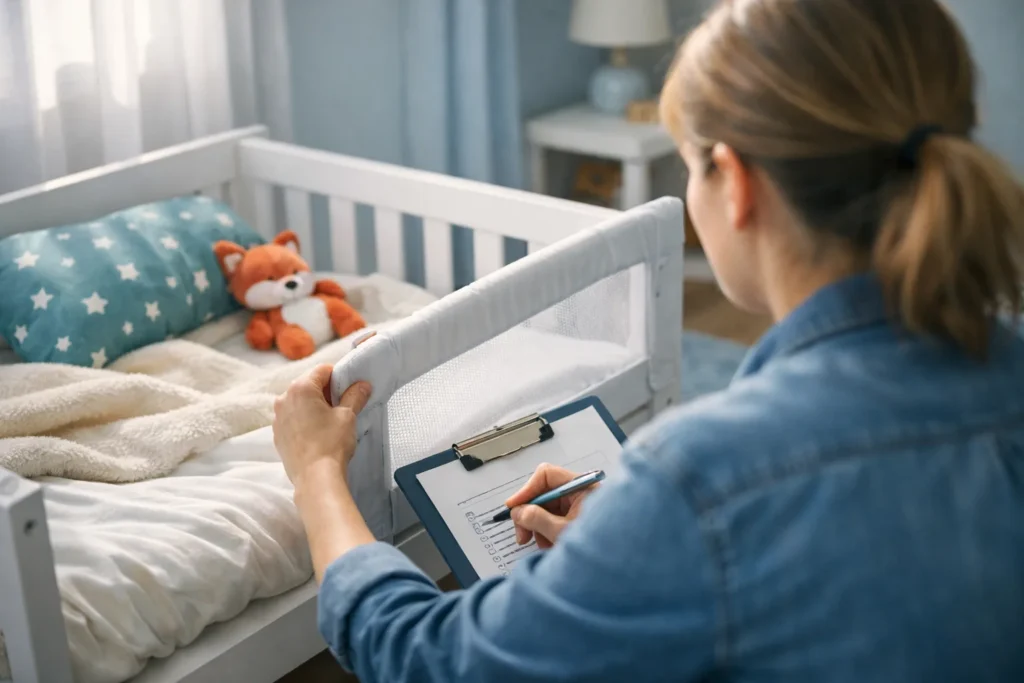
- Guardrails. If the bed is a twin or full, add a guardrail on the open side, and make sure there is no gap between the rail and the mattress where a child could be trapped.
- Anchor furniture. Dressers, bookcases, and televisions tip easily when a toddler climbs. Use wall anchors on every tall piece in the room.
- Window cords. Cords from blinds and shades are a strangulation hazard. Choose cordless window coverings if you can, and keep beds and furniture away from windows.
- Cords and outlets. Cover outlets and keep electrical cords out of reach. Tuck baby monitor cords away from the bed.
- Floor. A soft rug beside the bed cushions a fall, but a rug should not slide. Remove anything with sharp corners within reach.
- Bedding. A toddler can use a small pillow and a light blanket once out of the crib, per general pediatric guidance. Remove extra stuffed animals if they crowd the bed.
- Doors and gates. A baby gate at the bedroom door, or a door cover, keeps a child who wanders at night from reaching stairs or the kitchen.
Cords on window blinds and shades can strangle young children, so keep cribs, beds, and furniture away from windows and choose cordless window coverings where possible. — Paraphrased from U.S. Consumer Product Safety Commission guidance
Making the switch go smoothly
Treat the bed as an event, not a surprise. Let your toddler help pick sheets, and talk about it for a few days. Keep the bedtime routine the same, with the same book and the same goodnight words, because the routine is what tells your child it is time to sleep. Expect some night wandering at first. Walk your toddler back to bed calmly and without much talk.
If your child gets up many times a night or seems afraid of the new bed, move back to the crib for a few weeks if that is an option and try again later. Persistent sleep trouble is worth raising with your pediatrician. For more on bedtime structure, see the guides in Potty training, since the move to a bed often comes at the same time.