



The Great Smoky Mountains are beautiful, and getting there with a toddler can be a long haul. Great Smoky Mountains National Park, which straddles North Carolina and Tennessee, is one of the most visited parks in the country, and the drive from places like Atlanta, Charlotte, or Knoxville can fill most of a day. The trip goes better when the nap is part of the plan instead of an afterthought.
Plan the driving around the nap
Look at your toddler’s usual nap time, then schedule the longest stretch of driving to overlap with it. A child who normally naps from 12:30 to 2:30 p.m. will often sleep in the car seat for a good portion of that window, which gives the adults a quiet hour or two on the road.
- Leave right before the nap. Feed lunch early, change the diaper, and buckle in when the yawns start.
- Or leave early in the morning. Some families start at dawn so a sleepy toddler gets part of the night’s sleep in the car, then stop for breakfast and a play break.
- Keep the first day short. If the drive is long, split it in two and sleep somewhere along the way.
Car seat and safety basics
Car seats are for travel, not for long stretches of sleep outside the car. Pediatric safety groups, including the American Academy of Pediatrics, recommend taking a child out of the car seat for a break during a long trip, and not leaving a sleeping child in a seat once you have arrived. Plan stops every two hours or so to stretch, change a diaper, and let your toddler move around. Never leave a child alone in a parked car, even for a minute, and keep the cabin comfortable. If you have questions about car seat use, your pediatrician or a certified car seat technician can help.
Rest stops that work for toddlers
Rest areas along the interstates leading into Tennessee and western North Carolina usually have grass, picnic tables, and restrooms. A ten-minute run around a field can burn off enough energy to make the next stretch smoother. Bring a small bag with a change of clothes, a favorite snack, and a book so you do not have to dig through the trunk.
Napping once you arrive
Gatlinburg, Tennessee, the busy town at the park’s main northern entrance, is loud and bright, with crowds and neon. Cabins and lodges just outside town can be quieter and darker. Whatever you book, think about nap conditions.
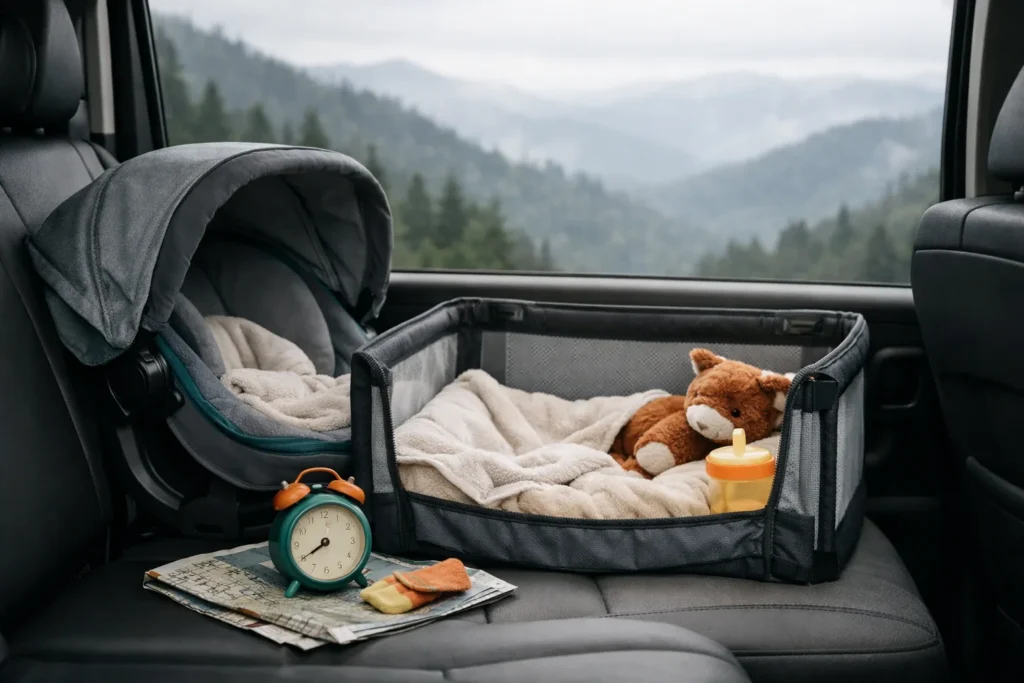
- Bring a portable sleep space. A travel crib or pack-and-play that your toddler already knows can make a new room feel familiar. Follow the manufacturer’s instructions and use only the firm mattress it came with.
- Create darkness. A towel clipped over a window or a pair of binder clips on thin curtains cuts the daylight. Keep the sleep sack, white noise, or stuffed animal your child uses at home.
- Use the parked car carefully. A nap in the car seat in a shady, safe spot with an adult awake in the car is one way some families manage a long day on the road. Stay with your child the entire time and keep the windows cracked or the air on.
Park days without a meltdown
Great Smoky Mountains National Park has short, easy trails and scenic drives that suit toddlers, and the National Park Service website, nps.gov, lists current conditions and visitor information. Keep park days simple: one main outing in the morning, lunch, and then a rest period at the usual time, either in the lodge or in the car on a scenic drive. Pushing through the nap tends to make the late afternoon much harder.
Getting back to normal
Expect a day or two of off-schedule sleep after you come home. Go back to the usual wake time, naps, and bedtime routine at once, and avoid making up for lost sleep with extra-long naps late in the day. Most toddlers settle back into the pattern within a few days. If sleep stays disrupted for weeks, ask your pediatrician.