

If you have a two-year-old, you already know the feeling of reading the same book for the fifteenth time this week. It is tempting to wonder whether it is time to move on. In fact, that repetition is exactly what a toddler needs. Libraries are a great way to keep a rotating supply of favorites, and the Seattle Public Library in Washington is a handy place to start, with children’s staff who put together reading suggestions for young kids.
What works at age two
Two-year-olds are learning to talk, and books are one of the best ways to help. Look for titles that match how they are growing:
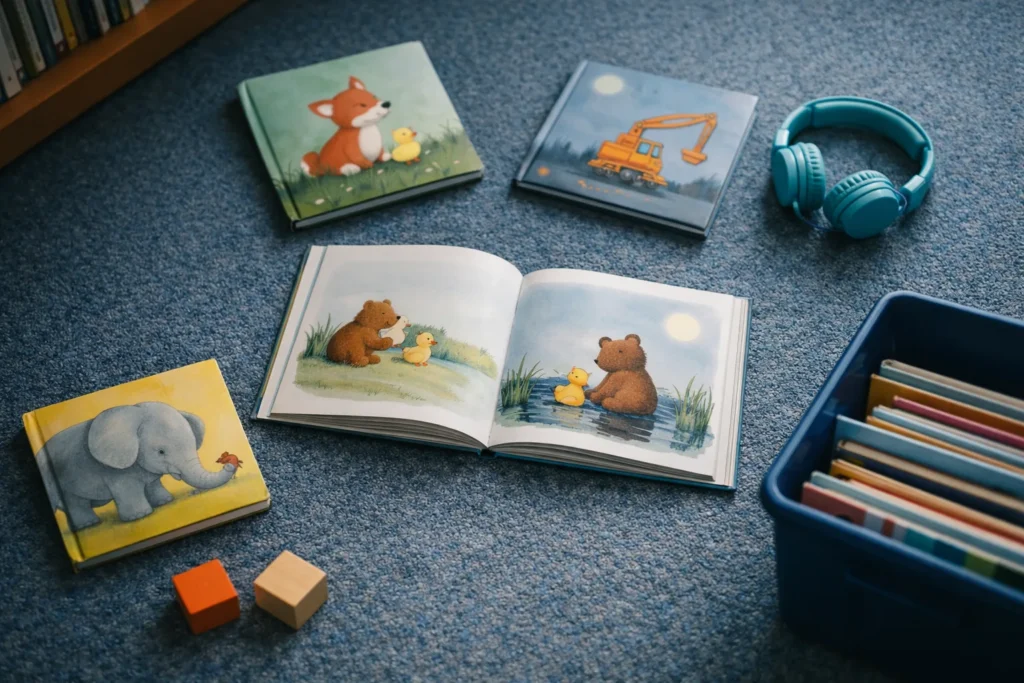
- Sturdy board books. Thick pages survive chewing, tugging, and the occasional throw.
- Simple, rhythmic text. Rhymes and repeated phrases let your child join in on the last word of a line.
- Clear pictures of familiar things. Animals, vehicles, food, and everyday routines such as bath time and bedtime invite your child to point and name.
- Lift-the-flap and touch-and-feel books. These keep hands busy and attention longer.
- Short stories with a beginning and an end. Classics like Goodnight Moon and Brown Bear, Brown Bear, What Do You See? remain popular because they match this stage so well.
Why repeat reading is a good thing
Hearing the same story again and again lets a toddler anticipate what comes next, learn new words, and feel a little bit in control. Many parents find their child will “read” the book back to them, reciting from memory. Do not worry about getting through every page. If your child only wants to look at one picture for five minutes, that counts as reading time.
Making reading part of the day
A short ritual is easier to keep than a long one. Some ideas that work well in many homes:
- Pick a regular time. After breakfast, before nap, or before bed all work, as long as it is predictable.
- Let your child choose. Offer two or three books and let her pick, even if it is the same book again.
- Ask small questions. “Where is the dog?” or “What do you think happens next?” encourages talking without turning it into a quiz.
- Keep books at toddler height. A low basket or shelf lets your child pick one up on her own.
Borrowing from the library
A library card is one of the least expensive tools in parenting. Public libraries in the Seattle area offer a wide range of picture books, many with storytime sessions designed for toddlers where children can hear songs, rhymes, and stories along with other families. Visit the Seattle Public Library site for current hours, branch locations, and program schedules, since offerings change over time.
Some tips to make borrowing smoother:
- Set a weekly or biweekly library day so that books come and go on a rhythm.
- Pick one basket or bag for library books, so they do not get lost under the couch.
- Borrow a mix of old favorites and a few new titles, and let your child hold the stack.
- If a book becomes a must-have, renew it, or ask your branch about borrowing it again.
When a child is not interested
Some two-year-olds would rather run laps than sit in a lap. That is normal. Try reading while your child plays, or choose books with lots of action words that you can act out together. If you ever have questions about your child’s speech or language development, your pediatrician is the right person to ask. In the meantime, the CDC maintains general information about developmental milestones at cdc.gov.