

Screens are part of modern family life, and most parents of toddlers have wondered how much is too much. The American Academy of Pediatrics (AAP) offers general guidance and a free planning tool to help families decide for themselves. Here is a quick summary, and a way to put it into practice.
What the AAP generally recommends
According to the AAP’s public guidance on HealthyChildren.org, the recommendations for young children break down roughly like this:
- Under 18 months: avoid screen media other than video chatting with family.
- 18 to 24 months: if you choose to introduce screens, pick high-quality programming and watch it together with your child.
- Ages 2 to 5: limit non-educational screen time to about one hour a day on weekdays and a bit more on weekends, choose high-quality content, and watch together when possible.
The AAP also encourages families to keep screens out of bedrooms and to turn them off during meals and for an hour or so before bed. These are general guidelines, not rules for every child, so check with your pediatrician if you have questions about your own situation.
Make a Family Media Plan
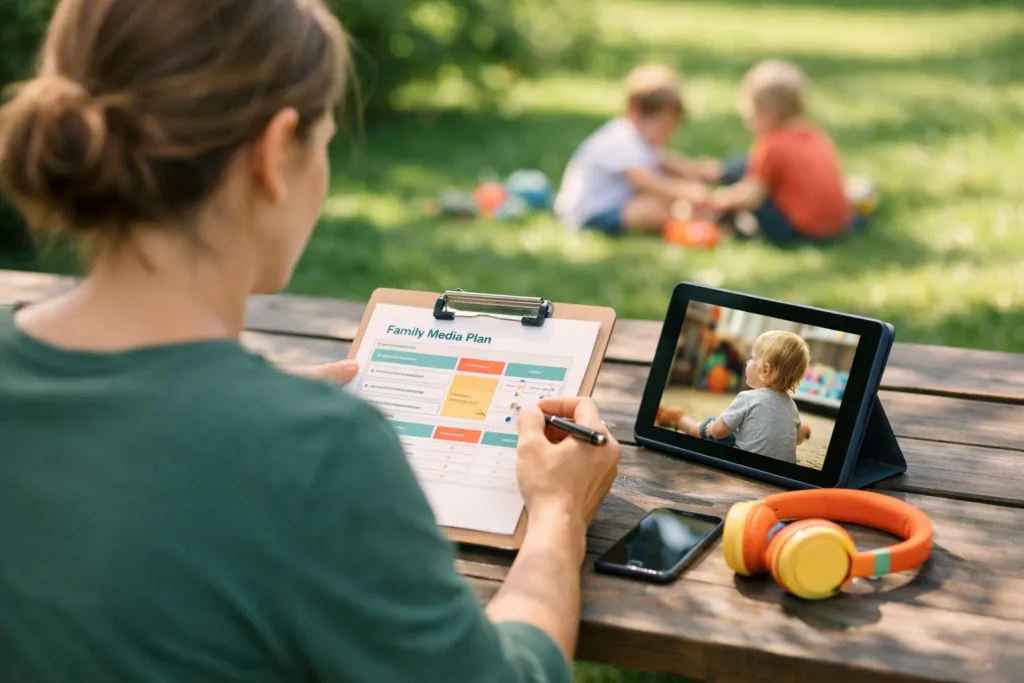
The AAP offers a Family Media Plan tool on HealthyChildren.org that lets you build a personalized plan. You do not have to use it, but the questions are a useful starting point. A basic plan for a toddler household might cover:
- Screen-free zones. For example, the dinner table and the bedroom.
- Screen-free times. Meals, the hour before bed, and car rides unless it is a long trip.
- Which content is allowed. Choose slow-paced shows with clear stories and simple language, and preview anything new.
- How you will watch. Sit with your child, talk about what you see, and connect it to real life.
- What is the grown-up rule. Children copy what adults do, so a phone-free dinner applies to everyone.
Choosing content
Not all screen time is the same. A video call with a grandparent is different from endless fast-moving clips. Look for programs without ads, with a calm pace, and that encourage your child to sing, move, or answer. Turn off autoplay so that one show does not roll into another without a decision from you.
Keeping it realistic
Some days will include more screens than you planned, especially when you are sick, traveling, or exhausted. That is okay. A plan is a guide, not a test. If you want to cut back, replace screens with something specific, such as a book, a walk, or music in the kitchen, rather than only taking something away.
This article is general information, not personal medical advice. If you have concerns about how screens affect your child’s sleep, behavior, or language, talk to your pediatrician.