

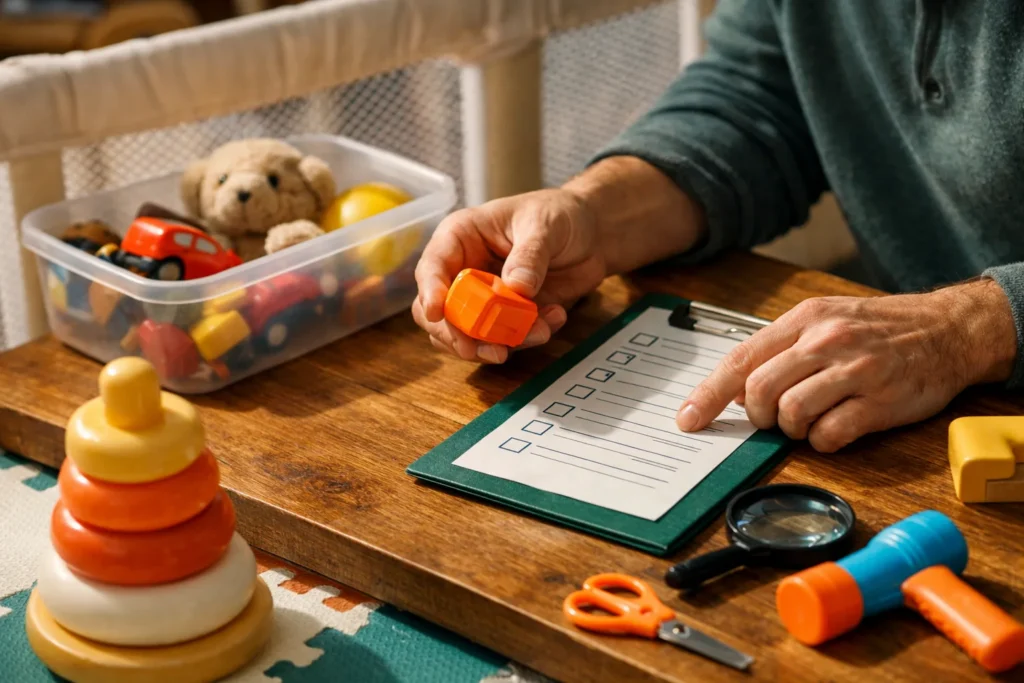
A toddler who can crawl, climb, and carry things around will turn any room into a play space whether you plan for it or not. Setting up one dedicated area makes life easier. It gives your child a place to explore safely, it keeps the rest of the house less cluttered, and it lets you relax a little when you are cooking in the next room. The U.S. Consumer Product Safety Commission (CPSC) publishes toy safety guidance that can help you plan one, and the American Academy of Pediatrics shares practical home safety tips on HealthyChildren.org. Here is a walk-through of the whole setup.
Step 1: choose the right corner
The best spot is one you can see from where you spend most of your time, such as a corner of the living room or a nook beside the kitchen. A few things to look for:
- A clear line of sight. You should be able to glance up and see your child without leaving what you are doing.
- Away from stairs, fireplaces, and heaters. Use gates or safety barriers where needed, and make sure they are installed according to the maker’s instructions.
- Away from windows with cords. Blind and curtain cords are a strangulation hazard, so keep them out of reach, or choose cordless window coverings.
- Away from outlets and cables. Cover unused outlets and keep power strips and charger cords behind furniture.
- Good light. Natural daylight makes a space feel inviting and helps you spot small objects on the floor.
Step 2: think about the floor
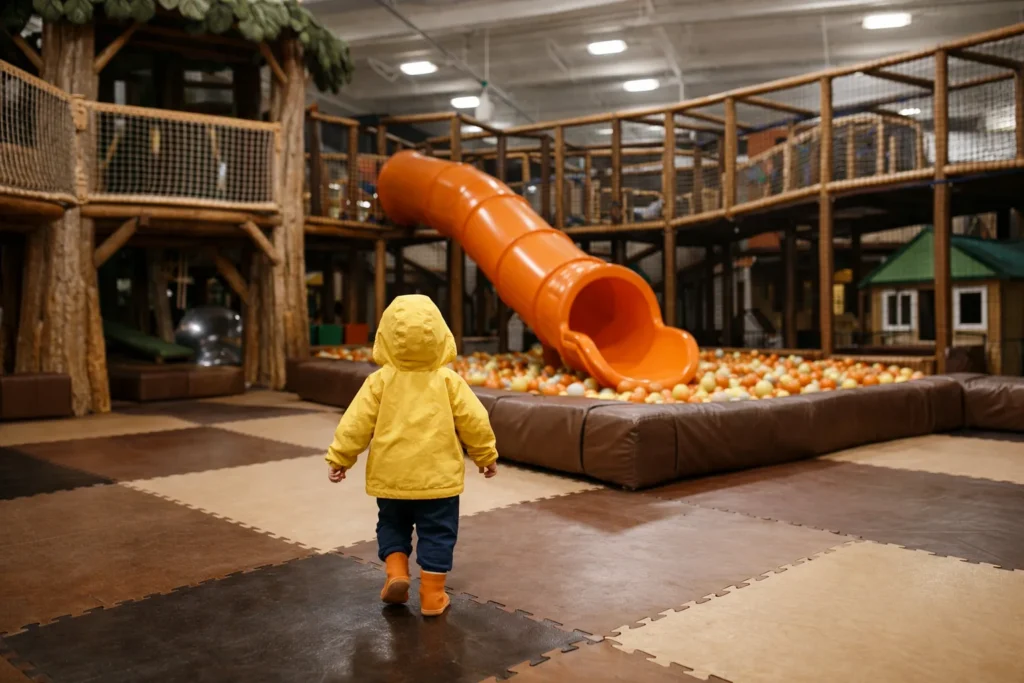
Toddlers fall, and they fall often. A hard tile or wood floor can make every tumble sting. A large, flat rug with a nonslip backing, or interlocking foam floor tiles, gives some cushion and a place to sit. Check that the edges lie flat so they are not a tripping hazard. Skip thick, fluffy rugs that can make it harder for a new walker to balance, and avoid piles of loose blankets that could be a hazard in a sleep space.
Step 3: low shelves and open storage
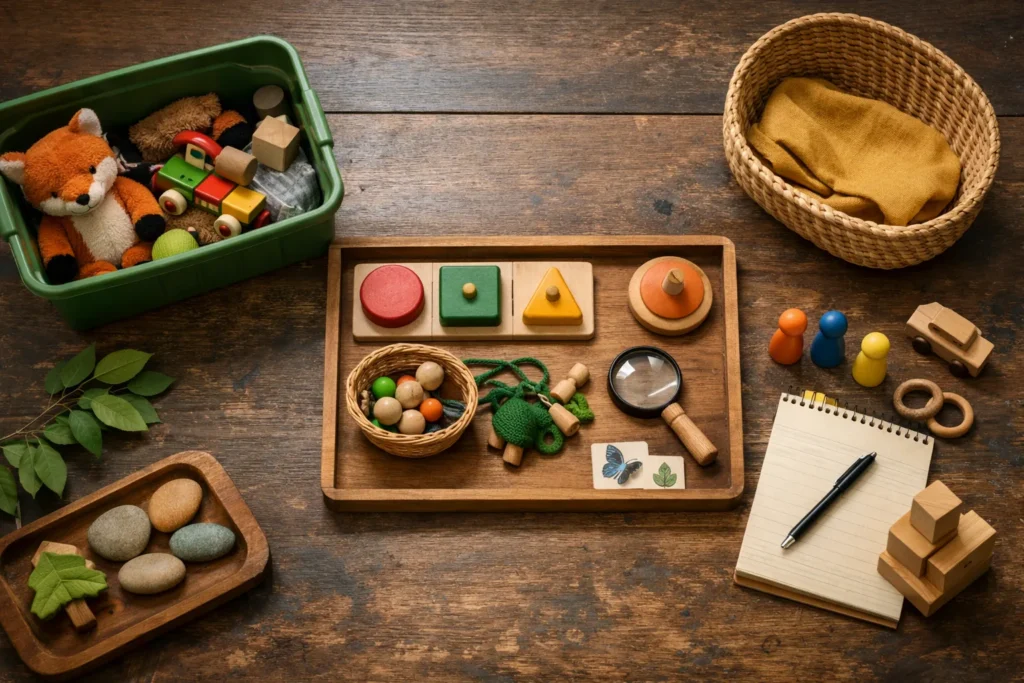
A toddler is more likely to play with toys she can reach. Low, open shelves or a few shallow baskets let her choose, and they make cleanup something she can help with. A few safety points:
- Anchor all furniture. Bookcases, dressers, and TV stands can tip over when a child climbs them. Use wall anchors or brackets, following the instructions for each piece.
- Use open bins rather than toy chests with heavy lids. A lid that slams shut is a risk for small fingers. If you do use one, choose a lid that stays open or is removable.
- Keep heavy items low. Place books and heavier toys on the bottom shelf and lighter items higher.
- Store grown-up items elsewhere. Cleaning products, medications, and anything sharp belong in a locked or high cabinet.
Step 4: read the age label on toys
The age range printed on a toy is not just a suggestion about what will be fun. It reflects safety considerations about what children of that age can handle. Toys for children under three are held to specific rules about small parts, because toddlers put things in their mouths. The CPSC advises that toys for this age group should not have parts small enough to fit inside a small-parts test tube, which is roughly the size of a toilet paper tube. At home, a simple rule is that if an object fits inside a toilet paper tube, it is too small for a child under three.
Toys sold in the United States are generally expected to comply with the safety standard known as ASTM F963, which covers things like sharp edges, flammability, and toxic materials. You can learn more about how the rules work, and check for recalls, at cpsc.gov. It is a good habit to look up the toys you already own, especially hand-me-downs and gifts from relatives.
Step 5: watch for button batteries and magnets
Two household hazards deserve special attention. Button batteries and coin-sized batteries can cause serious injuries when swallowed, and they are found in remote controls, greeting cards, and some toys. Keep them out of reach and make sure battery compartments on toys are secured with screws. Small, powerful magnets are another danger when swallowed, so keep magnet sets and magnetic toys meant for older children away from your toddler.
If you think your child has swallowed a battery or a magnet, treat it as an emergency: call 911 or Poison Control at 1-800-222-1222 right away.
Step 6: watch for strings, balloons, and plastic bags
Cords and strings longer than about 7 inches (18 cm) can be a strangulation risk for young children. Uninflated balloons and pieces of broken balloons are a choking hazard, and plastic bags should be kept far from a child’s reach. Toys with long cords, such as pull toys, should be used only with supervision.
Step 7: keep it clean
Toys that go in the mouth need regular cleaning. A quick routine is easy to keep:
- Wipe hard plastic and wooden toys with a damp cloth and mild soap, then rinse and let them dry.
- Wash stuffed animals and fabric toys according to the care label.
- Check toys weekly for cracks, loose parts, and peeling paint, and remove anything broken.
- Wash the floor mat and the rug on a regular schedule.
Step 8: supervise, and keep the space simple
No setup replaces an adult nearby. A well-planned play corner lowers risk, but it does not remove it, and you should stay close, especially when your child is playing with something new. It also helps to keep the space uncluttered. Too many toys at once can overwhelm a toddler, and a handful of open-ended items, such as blocks, soft balls, and board books, often hold her attention longer than a crowded shelf.
As your child grows, revisit the setup every few months. A space that was safe for a crawler might need changes for a climber. If you have questions about your child’s development or about any health or safety concern, talk to your pediatrician, who knows your family and can give advice that fits your situation. For more on home safety, HealthyChildren.org has articles from pediatricians that are easy to browse.