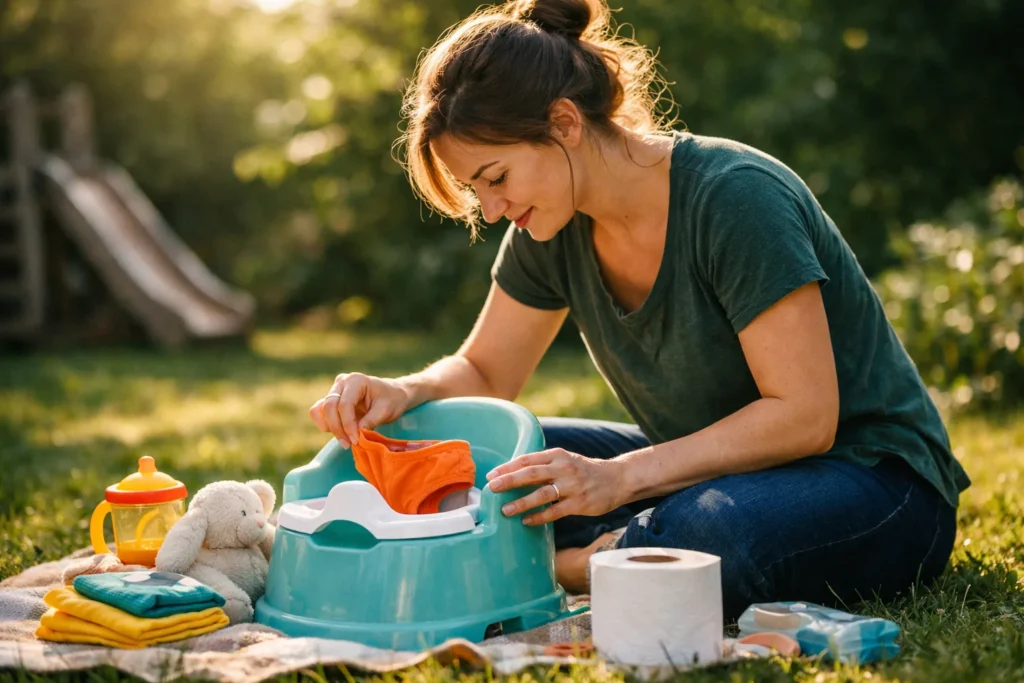

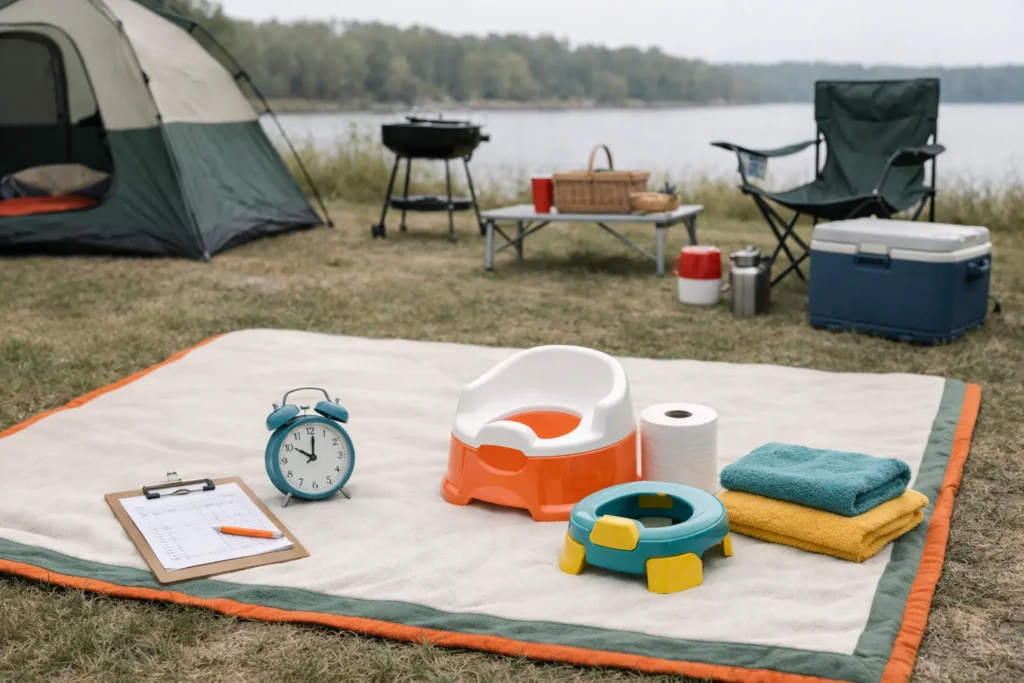
A long holiday weekend is a tempting time to start potty training, because both parents are home and there is nowhere to go. Memorial Day weekend, on the last Monday of May, gives three quiet days that suit a first attempt. This plan comes from a stay-at-home household in Asheville, North Carolina, that tried it with a child who was showing readiness signs. It is a plan, not a promise. Some children catch on in a weekend, and many do not, and both are normal. Check with your pediatrician if you have questions about your child.
Before the weekend
- Choose a potty chair or a seat that fits on the toilet, plus a step stool.
- Stock up on training pants and underwear, with at least a dozen pairs, and a few spare outfits.
- Clear the schedule: no trips, visitors, or big outings.
- Read a book about using the potty and talk it through for a few days.
The plan, day by day
| Day | Focus | Bathroom schedule | Parent note |
|---|---|---|---|
| Saturday | Introduce the potty and underwear; stay near the bathroom | Sit on waking, then about every 45 to 60 minutes, and after meals | Keep a cheerful, neutral tone; expect many accidents |
| Sunday | Practice noticing signals; fewer reminders | Every 60 to 90 minutes; sit before and after naps | Offer a simple praise or sticker for trying, not only for success |
| Monday (Memorial Day) | Short outing nearby with a spare outfit | Sit before leaving, then about every hour | Bring a portable seat and a change of clothes; stay close to a restroom |
A typical hour
Each hour has the same rhythm: offer a drink, wait a little, then walk to the bathroom and sit for a few minutes. Read a short book or sing a song while your child sits. If nothing happens, that is fine. Get up, wash hands, and go back to play. If an accident happens, say calmly, “Pee goes in the potty. Let’s clean up,” and help your child change. No scolding, and no big reaction either way.
Rewards that stay simple
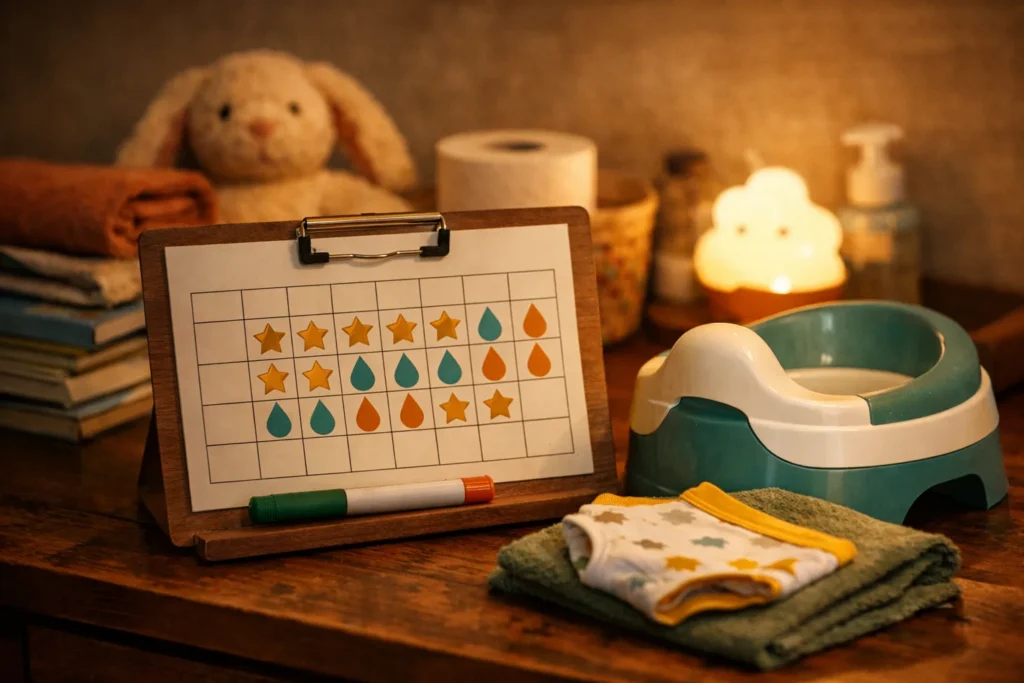
Small rewards can help some children. A sticker, a high five, or a favorite song for each success is plenty. Avoid food rewards if you can, since they can get in the way of mealtime habits, and avoid punishment for accidents. Praise effort and let the child feel proud.
What to do differently next time
- Start the schedule earlier. The first trip to the bathroom right after waking set the tone for the day.
- Use fewer words. Long explanations were lost on a two-year-old.
- Protect nap and bedtime. Use a diaper or training pants for naps and nights, since nighttime dryness comes later for most children.
- Keep outings short. The first trip out, even a short one, took more planning than expected.
When to stop and wait
If after a few days your child is upset, refuses the potty, or holds in bowel movements, take a break and try again in a few weeks. Pressure rarely helps. Ask your pediatrician about constipation or pain, and see the AAP’s HealthyChildren.org for general guidance.