
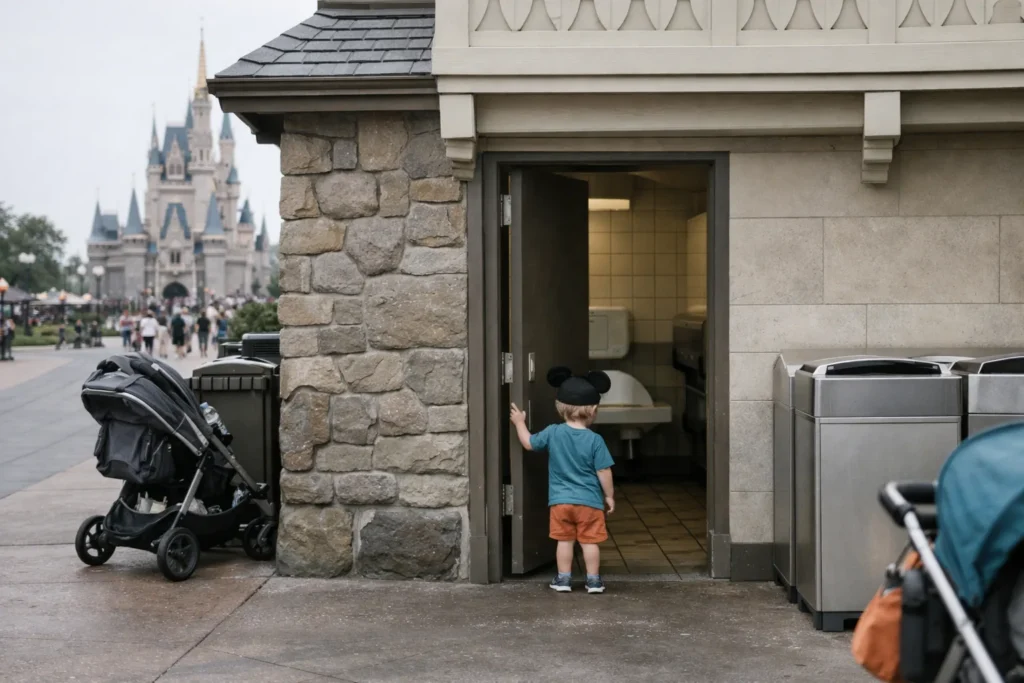
A day at Walt Disney World near Orlando, Florida, can involve long lines, loud sounds, heat, and a toddler who is just learning to listen to her body. That is a lot to ask of a child in the middle of potty training. With a little preparation, though, restrooms can become one of the calmer parts of the day.
Know where the family restrooms are
Most of the theme parks, including Magic Kingdom, have family or companion restrooms in addition to the standard men’s and women’s rooms. These single-room spaces let you take your child in privately, which can be a big relief when your toddler is nervous, needs help, or insists that Dad must come along. Check the park map or the official park app when you arrive, locate the nearest one to wherever you plan to start, and note a few more along the route.
The parks also have baby care centers, which are quiet, air-conditioned spaces with changing tables, nursing rooms, and a small area for a break. They are designed with infants in mind, but they can be a handy landmark and a calm place for a tired toddler to reset. Rules and locations can change, so confirm the details on the official Walt Disney World site before your trip.
Pack a portable seat
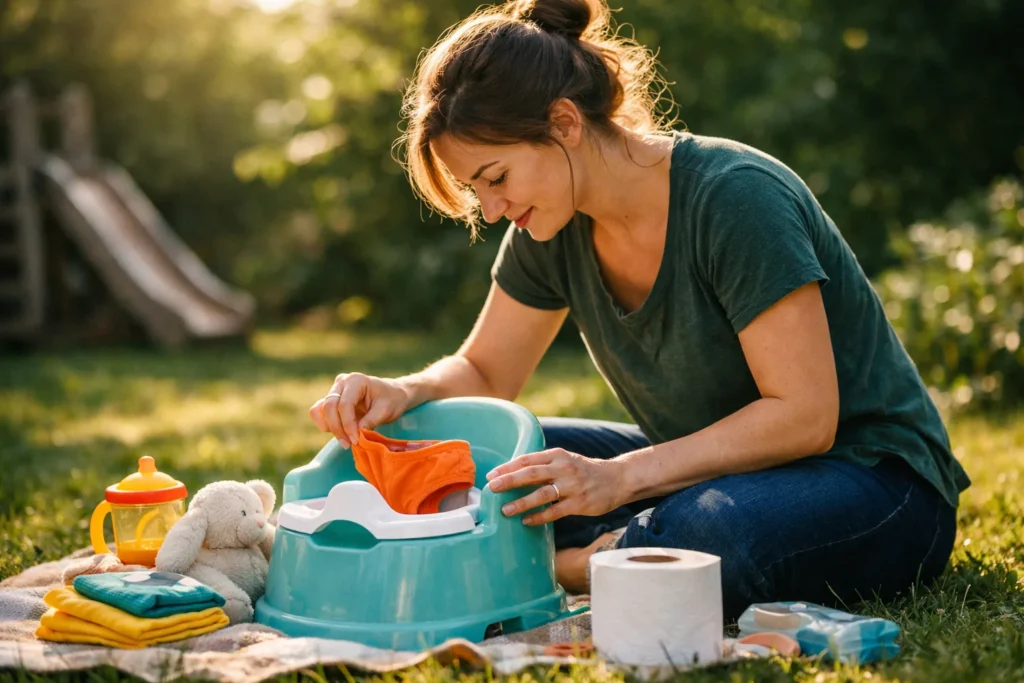
Standard public toilets are tall and wide, and a small child can feel unsafe perched on one. A foldable travel seat that fits over the regular seat can help a lot, along with a small step stool if your child likes one at home. Practice with the folding seat at home first so that it feels familiar rather than strange. A few other items are worth tucking into a bag:
- A full change of clothes, plus an extra pair of socks
- Two or three pairs of underwear or training pants
- A zip-top bag for wet clothes
- Wipes and hand sanitizer for the stretches between sinks
- A small towel to sit on after a splash
Handling the noise
Automatic flushers and powerful hand dryers are a classic reason toddlers refuse a public bathroom. The sudden roar can be startling even to adults. A few things that tend to help:
- Warn your child before anything happens. “The toilet will make a loud whoosh. You can cover your ears.”
- Cover the sensor. A small sticky note or a folded square of toilet paper over an automatic flush sensor stops it from flushing early. Flush manually when your child has stepped away.
- Skip the dryer. Dry hands with a paper towel or your own spare cloth.
- Bring ear protection. Some families use small kid-sized earmuffs on loud days.
Plan the day around bathroom breaks
Toddlers can get so caught up in a ride, a parade, or a snack that they forget to notice the signal, and then everything happens at once. Build bathroom breaks into your day the way you would at home: after waking, after meals, before and after longer rides, and before heading to a new section of the park. Offer the toilet when you pass a restroom, even if your child says no, and treat it as an ordinary stop rather than a big event.
Heat and extra fluids can also change how often your child needs to go. Keep water handy and watch for the early signs your child usually shows, such as squirming, going quiet, or holding herself.
Accidents will happen, so plan for them
Even a well-trained child may have an accident on vacation. New surroundings, excitement, and a disrupted schedule all make it more likely. Staying calm is the best strategy: say that it happens, change the clothes, and carry on. Many families also choose training pants or pull-up style protection for the park day itself and return to underwear at the hotel. There is nothing wrong with that choice, and it can lower stress for everyone.
If your child had only just started potty training before the trip, it is fine to decide that this is not the week to push. A vacation is an extra change, and the American Academy of Pediatrics notes that regression is common during times of stress or disruption. Talk with your pediatrician if you have any questions about your own child’s progress.
A few last reminders
- Teach your child that restrooms are for going and washing hands, not for playing in the water.
- Stay within arm’s reach in any public restroom.
- Wash hands with soap and water whenever possible, and use sanitizer between locations.
- Practice what you will say, such as “Tell me when your body says it is time.”
Most of all, keep expectations loose. The goal for the day is a good time, and a few quick, calm bathroom stops are simply part of the adventure.