




Three weeks of dry underwear, a proud little face at every success, and then a box-filled living room or a baby in a bassinet, and suddenly the puddles are back. If that is where you are standing right now, take a breath. A setback after a big change is one of the most common bumps in the whole process, and it rarely means the earlier progress was lost.
Why a big change can undo a good streak
A toddler’s world is small. The bathroom down the hall, the sound of the flush, the stool by the sink, the face that always shows up when she calls: these are all part of how she knows what to do. Move to a new house in Asheville, North Carolina, or bring home a newborn, and half of those cues disappear overnight. Her attention, her sleep, and her sense of security all get pulled in other directions, and bladder awareness is one of the first skills to slip when everything else feels wobbly.
The American Academy of Pediatrics (AAP) describes accidents and regression as a normal part of learning to use the toilet, especially during stressful periods such as a new baby, a move, or starting child care. Nothing is wrong with your child, and nothing is wrong with you.
What it looked like in our house
When our family moved across Asheville with a three-year-old who had been dry for almost a month, the first week in the new place brought four accidents in two days. The bathroom was unfamiliar, the light switch was too high, and the toilet seat felt colder and bigger than the old one. Then, just as things settled, a cousin came to stay with a newborn, and the accidents continued.
Looking back, the pattern was clear. Most accidents happened when our son was busy with something new, such as unpacking boxes or watching the baby, and simply did not stop to notice the signal. He was not being defiant and he was not lazy. He was distracted and a little unsure.
Staying neutral when it happens
The hardest part for parents is usually the reaction, not the cleanup. Here is what helped most:
- Use a flat, calm voice. Say something like, “Your pants are wet. Let’s get you changed,” and then do it together.
- Skip the disappointment. Sighs, “but you were doing so well,” and long lectures can make a child feel ashamed, which tends to make hiding accidents more likely.
- Keep cleanup boring. Let your child help carry the wet clothes to the hamper if she wants to, but do not turn it into a punishment.
- Save your energy for success. A quiet “you went on the potty” is plenty of praise.
Backing up one step at a time
Instead of declaring the whole project over or pretending nothing happened, move back a step and rebuild. A reasonable order looks like this:
- Bring back the timer or the routine. Offer the toilet after waking, after meals, and before leaving the house, the same way you did in the early days.
- Make the new bathroom feel familiar. Put the step stool, the potty seat, and a favorite book in place before you ask him to try.
- Offer a gentle reminder, not a question. “It’s potty time” works better than “Do you need to go?” because toddlers almost always say no.
- Use easy-to-remove clothing. Elastic waistbands help when a child has only a few seconds to get there.
- Consider training pants for outings. Many families go back to them for car rides and visits for a few weeks, with no shame attached.
Give it time. For us, things settled over about two to three weeks once the routines were back in place and the new baby was no longer the only topic in the house. Your own timeline may be shorter or longer.
What did not help
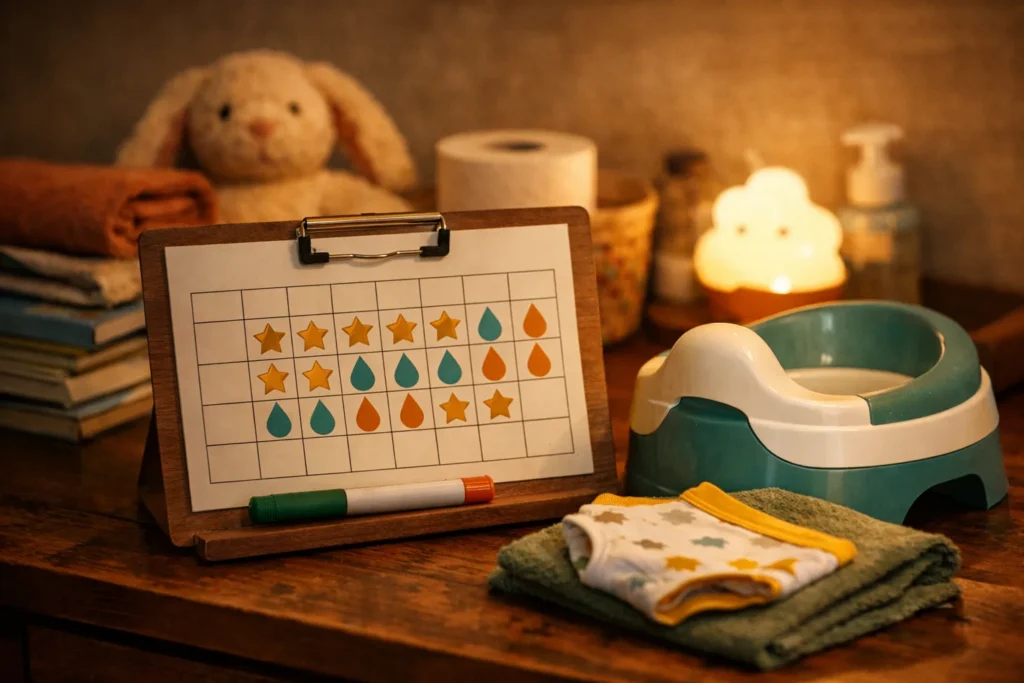
Several things we tried made the situation worse. Reward charts that had worked before became a source of tears when stickers were taken away. Asking over and over if he needed to go led to a flat “no” and then a puddle. And comparing him out loud to the baby, even jokingly, made him cling and refuse the bathroom altogether. If an older sibling is struggling, avoid contrasts with the baby in front of either child, and try to protect a few minutes of one-on-one time each day.
When to check with the pediatrician
This article offers general information only. Most setbacks fade within a few weeks, but talk to your child’s pediatrician if the regression lasts longer than that, if your child complains of pain when urinating, if you see constipation, or if there are other changes in behavior, appetite, or sleep that worry you. The HealthyChildren.org site from the AAP offers parent-friendly background on toilet training and common bumps along the way.
Meanwhile, if you also want ideas for taking the pressure off bedtime during a big change, our sleep and naps section has routines that tend to travel well from one house to the next.