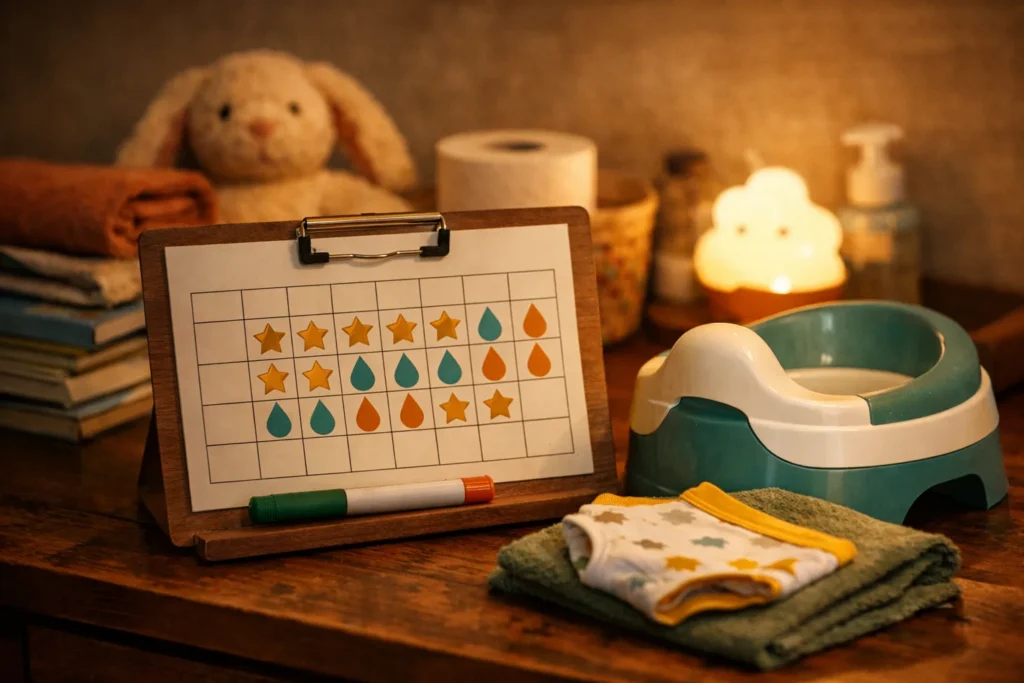





Your child is happily using the toilet all day, yet every morning the bed is wet. It is easy to wonder what went wrong. The short answer, according to the children’s health educators at Nemours KidsHealth, is nothing: dry nights usually arrive on their own schedule, often months or even years after dry days.
Daytime and nighttime are different skills
Daytime control is something a toddler can practice. She notices the signal, walks to the bathroom, and finishes the job. Nighttime control depends on a body that is still maturing. The brain has to wake the child when the bladder is full, or the body has to hold urine until morning, and both abilities develop at their own pace during sleep, when a child cannot practice anything at all.
That is why Nemours KidsHealth describes nighttime wetting as a developmental matter and not a behavior problem. Many children are not reliably dry at night until well after their fourth birthday, and some take longer. Heavy sleepers and children with a family history of late night dryness often take more time.
What to do in the meantime
- Use nighttime protection without apology. Overnight pull-on underwear or fitted pads are a practical tool, not a failure. They protect sleep for everyone.
- Protect the mattress. A waterproof cover and a spare set of sheets within reach make 2 a.m. changes quick and quiet.
- Make the bathroom the last stop. Add a final try on the toilet to the bedtime routine.
- Keep the path simple. A dim night light in the hall helps if your child wakes up and wants to go.
What not to do
Never punish, tease, or shame a child for wet nights. It does not speed anything up, and it can make bedtime stressful. Cutting off all drinks in the evening is also not a cure, although a normal amount of fluid earlier in the day is a reasonable habit. Avoid waking your toddler repeatedly to carry her to the bathroom, because that can interrupt sleep without teaching her anything about the signal.
When to ask the pediatrician
This is general information, not medical advice. Because nighttime wetting can sometimes have a medical cause, talk to your pediatrician if your child was dry at night for a long stretch and then started wetting again, if wetting comes with pain, unusual thirst, snoring, or constipation, or if it continues well past the preschool years and bothers your child. The doctor can look at the whole picture and give advice that fits your family.
You can read more at Nemours KidsHealth, which offers separate pages for parents on bedwetting and toilet learning.