



Getting a note that your toddler bit another child, or that she was bitten, is stressful for any parent. It can feel like a verdict on your child or your parenting. It is not. Biting is a common behavior in group care for children between about one and three, and the Early Childhood Learning and Knowledge Center (ECLKC), the resource site of the federal Head Start program, includes guidance for teachers and families on handling it.
Why toddlers bite
Toddlers bite for many reasons, and rarely out of meanness. Common triggers include teething, frustration when words are missing, wanting a toy, excitement, tiredness, or simply trying to see what happens. Because toddlers have limited language and impulse control, the mouth is an easy tool when feelings get big.
How to respond
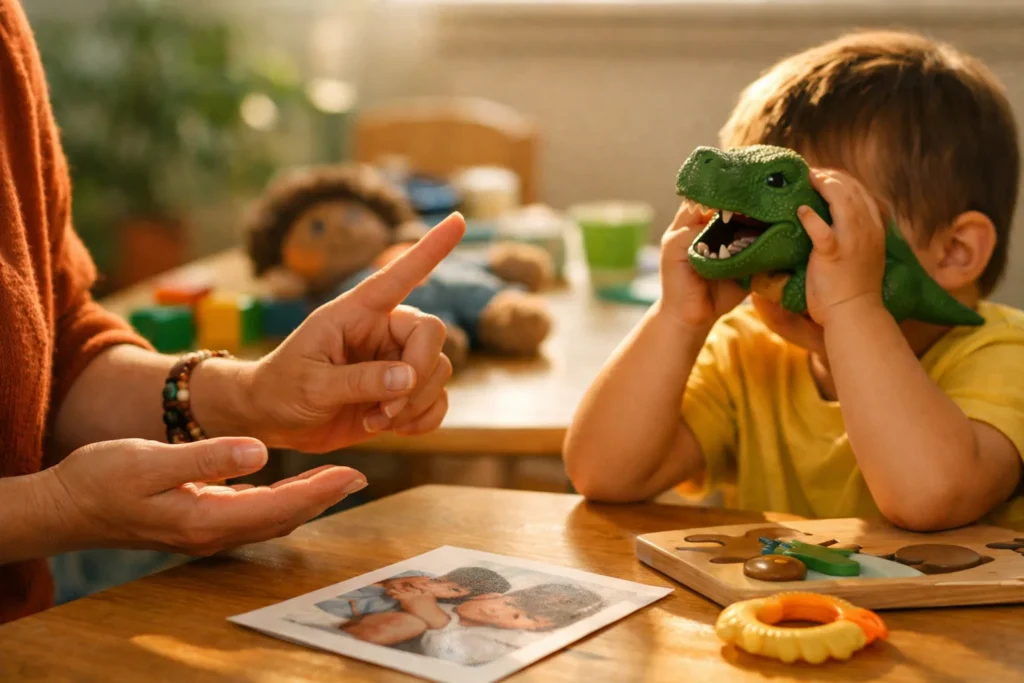
- Stay calm and brief. Say in a firm, quiet voice, “No biting. Biting hurts.” A long lecture is too much for a toddler.
- Look after the child who was bitten first. That models caring for others.
- Offer words. “You wanted the truck. You can say ‘mine’ or ‘my turn.’”
- Offer something safe to bite. If teething is the reason, a clean teething ring can help.
- Avoid biting back or punishing. Neither teaches what to do instead.
Work with the child care team
Ask the teachers what they notice. Does biting happen at a certain time of day, around certain toys, or when the room is crowded? Sharing information about sleep, meals, and home routines can help everyone find a pattern. Many programs follow the same steps at home and at school, so your child hears the same words from both. You can find the Head Start program’s general information for families on the ECLKC website.
When to ask for more help
Most children outgrow biting as their language develops. If it continues past about age three, happens very frequently, or comes with other concerns, ask your pediatrician or a child development specialist for guidance. This article is general information, not a diagnosis, and every child is different.