




The Centers for Disease Control and Prevention (CDC) is best known for tracking disease, but its early childhood pages also include practical parenting tips for each age. Alongside the “Learn the Signs. Act Early.” program on developmental milestones, the agency lists positive parenting ideas for toddlers that are short, clear, and realistic. Here is a summary, with notes on how they play out at a typical dinner time, bedtime, or morning rush.
The CDC encourages parents of toddlers to set up routines, give simple choices, praise good behavior, and respond to challenging behavior with calm, consistent limits. — Centers for Disease Control and Prevention, early childhood positive parenting guidance (summarized)
Keep routines predictable
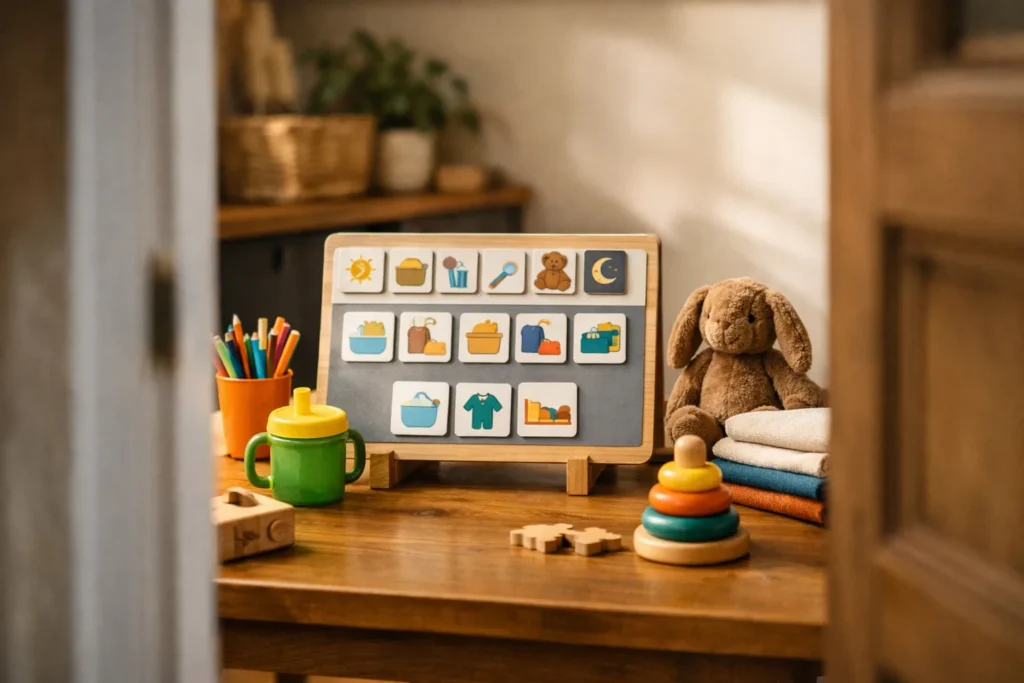
Toddlers feel safer when they know what is coming. A similar order of events for meals, naps, and bedtime lets her relax. When the routine has to change, a quick heads-up helps: “After lunch we are going to the store.” In our house, the biggest change came from doing the same three things before every nap, which cut protests noticeably within a couple of weeks.
Offer limited choices
Toddlers want independence, and a small choice gives them some control without leaving everything open. Ask, “Do you want the red cup or the blue cup?” rather than “What do you want to drink?” Keep both options acceptable to you, and keep the number to two. Choices are especially useful during times when your child tends to say no.
Praise the specific thing
Instead of a general “good job,” try naming what you saw: “You put your shoes by the door. Thank you!” Specific praise tells a toddler exactly what to repeat. It also feels more sincere to the child. Notice the small cooperative moments, not just the big ones.
Set clear, consistent limits
Limits keep a child safe and help her learn how the world works. Use short sentences and a calm tone, such as “Feet stay on the floor.” Follow through the same way each time, and do not expect understanding after one reminder. Toddlers need many repetitions. When a limit is hard, name the feeling and stay kind: “You are mad that we are leaving. We can come back tomorrow.”
Redirect when you can
A toddler who is about to throw a block can often be redirected with, “Blocks are for building. Here is a ball you can throw.” Redirection works best when you offer a real alternative that meets the need behind the behavior, such as energy or curiosity.
Take care of yourself too
Parenting a toddler is demanding, and the CDC reminds families that caregivers need rest and support too. Ask a friend or relative for help, take a short break when you can, and remember that no parent gets it right all the time.
When to look for support
If you are worried that your child is not reaching milestones, the CDC’s milestone tracker and checklists are available at cdc.gov, and your pediatrician can talk with you about next steps. Early support can make a real difference, and asking questions is never a bad idea. This article gives general information, not medical advice.