


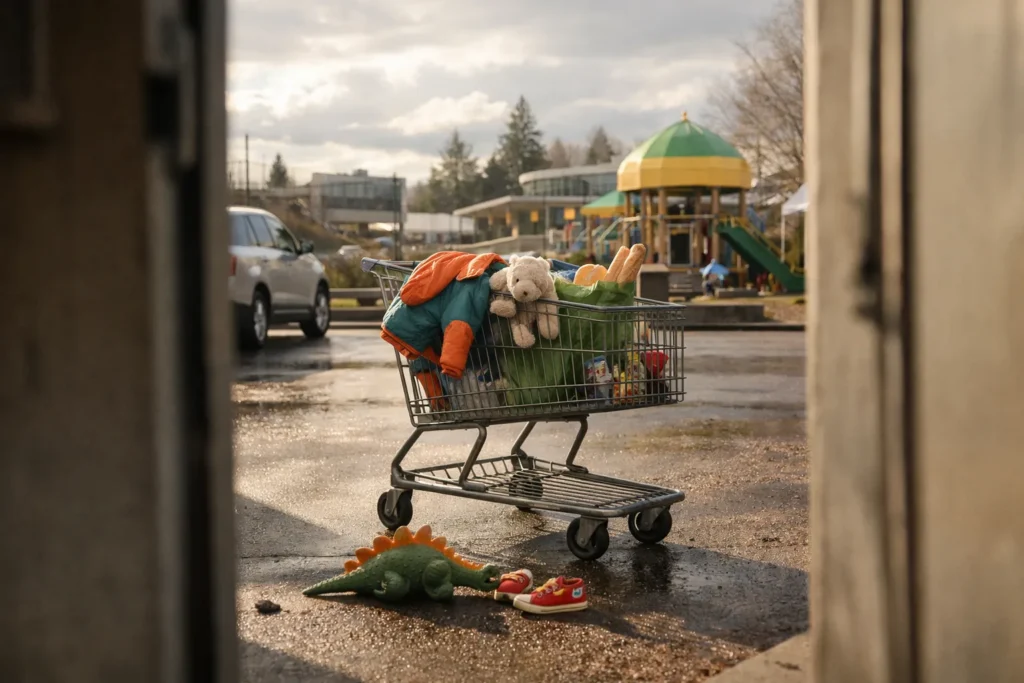
The morning at the Children’s Museum of Tacoma was a hit: water play, a pretend market, and a long stretch in the climbing area. By 4 p.m., the grocery store should have been a quick stop. Instead, it turned into a scene in the cereal aisle, with a two-year-old on the floor, a cart half full, and a lot of eyes on us. If you have been there, you know that feeling. Here is what tends to work, and what we try to do before it happens.
Why it happens after a big day
A toddler who has spent hours taking in new sights, sounds, and other children has used up a lot of her coping energy. Add hunger, a missed nap, and the bright lights and noise of a store, and even a small “no” can feel overwhelming. The tantrum is not a sign of bad parenting or a bad kid. It is usually a tired nervous system doing what it can.
In the moment: stay calm and stay close
- Take a breath first. Your calm is the most useful thing you can offer. A slow breath helps you speak in a low, steady voice.
- Get down to her level. Crouch beside her and keep your face relaxed. You do not have to say much.
- Name the feeling. “You are really tired and you wanted the crackers. That is hard.” Naming it helps her connect the words with what she is feeling.
- Hold the limit kindly. If the answer is no, it stays no, but you can offer a different choice, such as “You can hold the bananas.”
- Do not bargain in the middle of the storm. Giving in to a tantrum can teach that it works, and it is much harder to explain anything while she is screaming.
When to leave
Sometimes the best plan is to walk out. If your child cannot settle, or if she is unsafe, park the cart with a store employee or carry only what you need, and take her to the car or outside. Many parents feel they must finish the trip, but a calm exit usually saves everyone time. Give her a few minutes, a drink of water, and some quiet. When she has settled, you can decide whether to go back in or try again later.
If your child is thrashing, keep her safe from hard edges and from hurting herself or others, and stay nearby. Avoid yelling or threatening, which tends to raise the temperature for both of you.
Plan ahead so it happens less
You cannot prevent every meltdown, but a little planning goes a long way:
- Feed first. Offer a snack and water before you walk in, or bring a safe snack to eat while you shop. Make sure she is seated and supervised when she is eating.
- Choose the time well. Avoid the store right after a big outing or right before dinner. Mornings after breakfast are often easier than late afternoon.
- Give her a job. Let her hold a list, find the red apples, or put one item in the cart. Toddlers like to be helpful.
- Preview the trip. “We are going to get milk and bread, and then we go home. We are not buying treats today.”
- Keep it short. Plan a small trip, with a list, rather than a big weekly shop. A pickup order can help on tough days.
Afterward: reconnect
When the storm has passed and you are home, offer a hug or a quiet moment together. A short, simple conversation can help: “You were so upset at the store. Next time, we will have a snack first.” Keep it light, and do not expect a toddler to understand more than a sentence or two. The aim is to help her feel safe, not to lecture.
It is worth remembering that tantrums are common between ages one and four, and they usually fade as language grows and she gets better at handling frustration. If tantrums are very frequent or intense, last a very long time, or you have worries about your child’s behavior or development, ask your pediatrician for guidance. For another take on what to do when the day gets bumpy, the Children’s Museum of Tacoma site lists current hours and programs for planning calmer outings.